
Video VFX
VFX, visual effects, is anything added or altered digitally after filming that the audience is meant to accept as part of the world on screen: a composite, a removed rig, a blended background. It is mostly invisible when it is done well, closing a gap between what was actually on set and what the story needs an audience to see, rather than building something that announces itself as effects.
Most of what falls under VFX on our jobs is closer to clean-up than spectacle: removing a rig, a reflection, a crew member caught in frame, matching a shot taken at four in the afternoon to one taken at six so a scene reads as continuous. None of that is meant to be noticed, which is exactly the point of it. The jobs that call for something more built, a composite, a blended background, a digitally extended set, still get judged by the same standard: whether it holds up on a large screen at full resolution, not just on a phone where most faults hide.
Invisible work versus visible work
The two ends of VFX get judged by completely different standards. Invisible work, a wire pulled out of frame, a modern road sign painted out of a period shot, a patch of sky swapped because the weather turned halfway through a shoot day, is judged on whether anyone notices it at all. The whole job is done right if nobody in the audience ever clocks that a frame was touched. Visible work, a creature, an environment that was never actually built, a transformation, is judged on a different axis entirely: whether it holds attention in its own right rather than just passing unnoticed. Most briefs land almost entirely on the invisible end. A client asking for VFX is far more often asking us to fix a problem from the shoot than to build a spectacle from nothing.
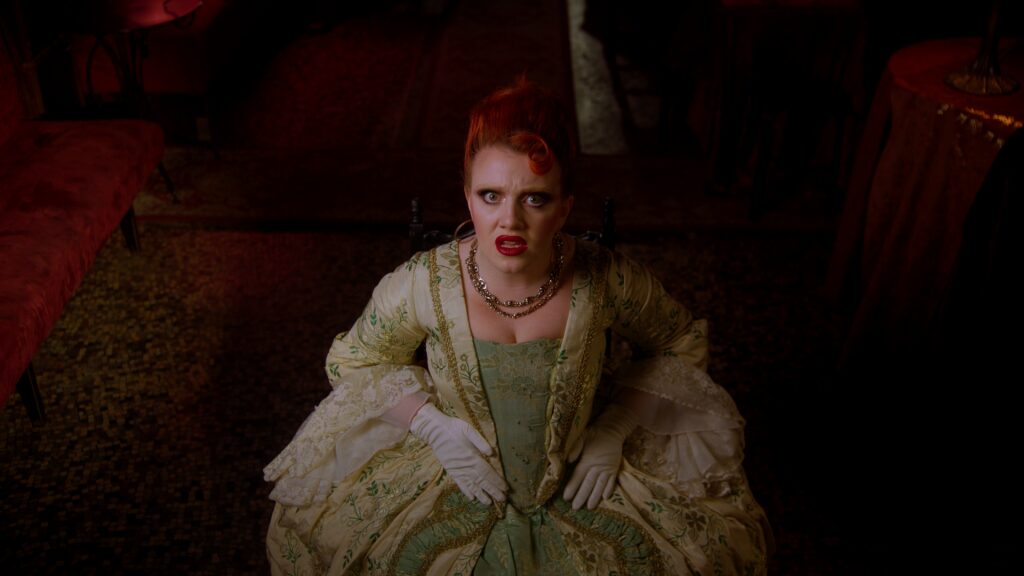
On CMAT's 'Whatever's Inconvenient', VFX sat alongside the surrealism and classical futurism already built into the shoot, blending the ancient and the modern in a single frame in a way practical effects alone could not manage on a music video schedule. The effect was never the point. The lonesome time-desert CMAT is wandering through was the point, and the VFX just made sure nothing in frame broke that.

The decisions that happen before anyone touches a computer
Good VFX starts on set, often weeks before anyone opens a compositing program. A shot that will need a sky replacement gets filmed against a flat grey or green backdrop rather than whatever the weather happened to be doing that day. A plate that will need an object removed gets a second take of the same frame with that object absent, so there is real, clean background information to paint back in rather than having to invent it from nothing. None of this costs much time on the day. Skipping it costs a great deal more time later, when an artist is left guessing at texture and light that nobody bothered to capture. We flag these requirements at the storyboard and pre-production stage specifically so the shoot can accommodate them rather than working around a gap afterwards.
Compositing is believability, not addition
Compositing means stacking several separately sourced layers, live footage, a generated element, a matte painting, a lighting pass, into one frame that reads as a single continuous image rather than a collage. The technical part is tracking: making sure an added element moves through the frame exactly as the camera that filmed the plate would have seen it, matching its shake, its parallax, its focus fall-off. The harder part is light. An element dropped into a scene without the same colour temperature, the same shadow direction, the same amount of grain as the footage around it will sit on top of the image rather than inside it, and an audience will feel that it's wrong even if they could not explain why. Most of the actual craft in compositing is in getting those small physical details to agree with each other, not in the generated element itself.

What a budget actually buys
VFX scales with time more directly than most other parts of production, because an artist refining a single shot can keep improving it for as long as someone is willing to pay for the hours. We price a shot against what it actually needs to achieve rather than against the most ambitious version of itself, and we say early on when an idea in a brief would need a budget and schedule the project does not have, rather than quietly scaling back the effect later and hoping nobody notices the difference.
The same shot can usually be built two or three different ways, and the cheapest route is not always the one that reads convincingly. Sometimes a practical trick on set, a mirror, a forced perspective, a careful crop, solves a problem faster and more believably than a digital fix would, and we'll say so rather than defaulting to VFX because it's the department this page is about.
We do not run a dedicated effects department, and we say so plainly at the brief stage. What we do instead is bring in the right specialist for the specific shot, on the schedule a music video or a campaign film actually has, rather than pricing in a full effects pipeline a smaller project was never going to need.
We treat VFX as a finishing tool rather than a genre. Most jobs that need it need a small amount, used precisely, not a showreel of what is technically possible.