
Video sound mixing
Sound mixing is the balancing of every audio element in a finished film, dialogue, music, effects, room tone, so they sit together rather than compete. It decides what an audience actually hears when several things are happening in the same moment. An audience forgives picture faults far more easily than it forgives sound, so a beautifully shot film with a bad mix still feels amateur.
Dialogue almost always sits at the top of the mix, loud enough to follow without effort, with music and effects built underneath it rather than competing for the same space. That sounds obvious written down and is the single most common thing an inexperienced mix gets wrong: a score that swells at exactly the moment someone is trying to say something that matters. Fixing it in review takes minutes once somebody has actually noticed it, which takes a trained and patient ear.
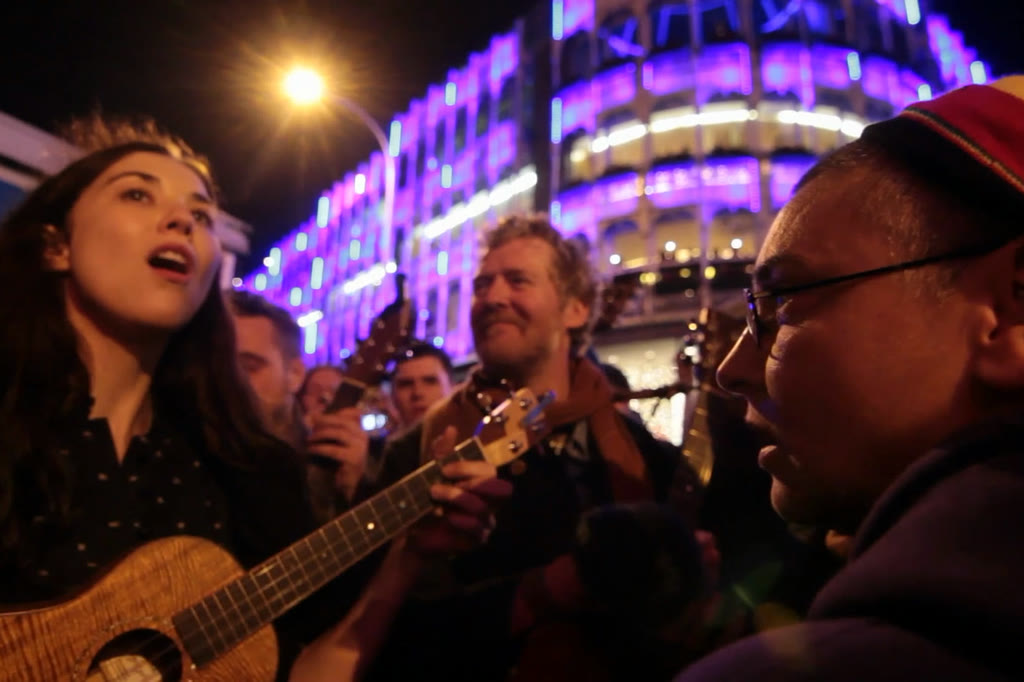
What actually goes into the mix
A finished mix is built from several separate stems rather than one audio file: production dialogue recorded on set, any additional dialogue recorded afterwards to replace a line a lorry drove past during, music, and a full layer of sound effects and ambience that an audience never consciously registers as separate from the picture. A door closing, footsteps on gravel, the room tone under a quiet pause, these are often not what was actually captured on the day. They are built or replaced afterwards because what the microphone picked up on set was thin, inconsistent, or simply not there.
Each of those stems gets its own pass before anything is combined: dialogue is cleaned of hums, clicks and background noise, music is levelled so a loud chorus does not require a listener to reach for the volume control a second later, effects are placed and timed against picture frame by frame. Only once each piece is clean on its own does the actual mixing, the balancing of all of them against each other, begin.
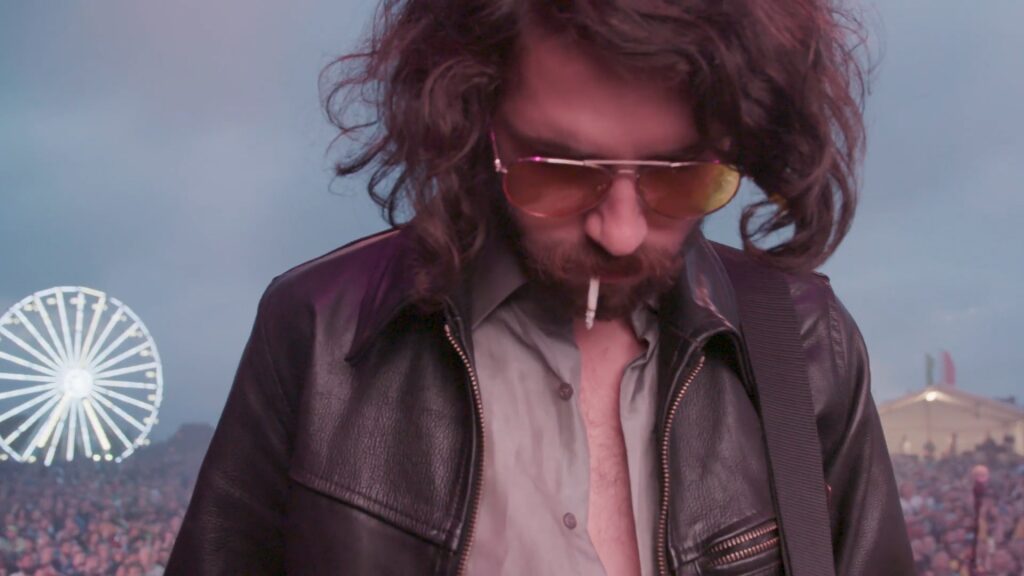
Live events and festival sets bring a version of this that cannot be fully solved on the day. Wind across a microphone, a generator running somewhere off camera, a crowd that gets louder exactly when someone on stage starts talking, none of it can be stopped mid-performance. The mix is where most of that gets managed afterwards: noise reduction on the dialogue track, a crowd bed brought up or down depending on whether the moment needs the audience in the room or needs them to disappear, effects added back in where a genuinely useful sound got buried under something louder next to it.
It sits alongside audio recording and editing in the credits on most of what we finish, Fontaines D.C.'s films among them: one of the last stages, and one of the least visible. Nobody praises a mix directly. They just do not notice anything wrong with it, which is the actual goal.
Loudness is a standard, not a feeling
Broadcasters and streaming platforms publish exact loudness targets a delivery has to hit, measured in LUFS rather than judged by ear, because a channel that lets one programme run louder than the next gets complaints within minutes. A mix that feels right in the room still has to be checked against the actual spec a platform requires, and a film can pass every creative review and still get bounced back at delivery for sitting half a decibel outside the target. That is a technical hurdle rather than a creative one, but it still has to be cleared before anything airs.
Broadcast and social carry different targets for a reason: a television mix is built to sit consistently against whatever programme airs either side of it, while a social platform is normalising everything in the feed to roughly the same perceived loudness regardless of what the original mix was aiming for. Delivering the same file to both without checking it against each spec is how a film ends up quietly louder or quieter than everything around it, which an audience notices even when they could not explain why.
We mix in a treated room on calibrated monitors, then check the result on ordinary speakers and a phone before calling it finished, because that is what most of an audience is actually going to hear it on. A mix that only sounds right on studio monitors has not been finished properly.
We mix for the platform a film is actually going to be watched on. A film destined for a phone screen, sound off half the time, needs different choices than one built for a cinema PA, and treating the two the same is a common way to lose an audience in the first five seconds.
A mix is not the same thing as a master
The mix is the creative balance: what sits loud, what sits quiet, where the emphasis falls. The master is what happens afterwards, the technical pass that makes sure that balance survives being compressed into a social media file, played through a television's built-in speakers, or streamed over a patchy connection. A film can have a genuinely excellent mix and still arrive sounding thin if nobody masters it for the format it is actually going to live in, which is why we treat delivery specs as part of the job rather than paperwork tacked on at the end. Both stages matter, and skipping either one shows up the moment a film leaves the room it was finished in.