
Video audio recording
Audio recording is the capture of sound on set or on location, dialogue, ambience, effects, at the same time as picture. Clean audio recorded on the day saves more time than almost anything else on a shoot. A shot that is slightly soft can survive the edit. A recording with a hum underneath it usually cannot, not without a voice starting to sound like it is coming through a wall.
Most audio problems are physical, not technical: a fridge humming in the next room, a radiator ticking as it cools, traffic on a road that sounded quiet until the mic picked it up. Scouting a location for sound as well as light catches most of this before it becomes a problem nobody notices until the edit, when there is nothing left to do about it.

Mic placement is a tradeoff, not a rule
A boom held just outside the top of frame is usually the first option, because it stays off the actor entirely and a boom operator can ride it to follow movement a fixed mic can't. The tradeoff is reach: a boom has to sit further back than anyone would like once a two-shot gets wide, and distance is what lets room noise creep back in under the voice. A lapel solves the reach problem by travelling with the performer, but it sits close enough to pick up clothing rustle and breath in a way a boom never does, and it has to be hidden well enough that it doesn't show under a shirt or catch the light.
Most setups end up running both at once rather than choosing. The boom becomes the primary track if the take is clean, and the lapel sits underneath as insurance for the moment someone turns their head away from the boom or the scene gets wider than planned. Having the safety net recorded already is cheaper than discovering in the edit that one line needs an ADR session to fix.
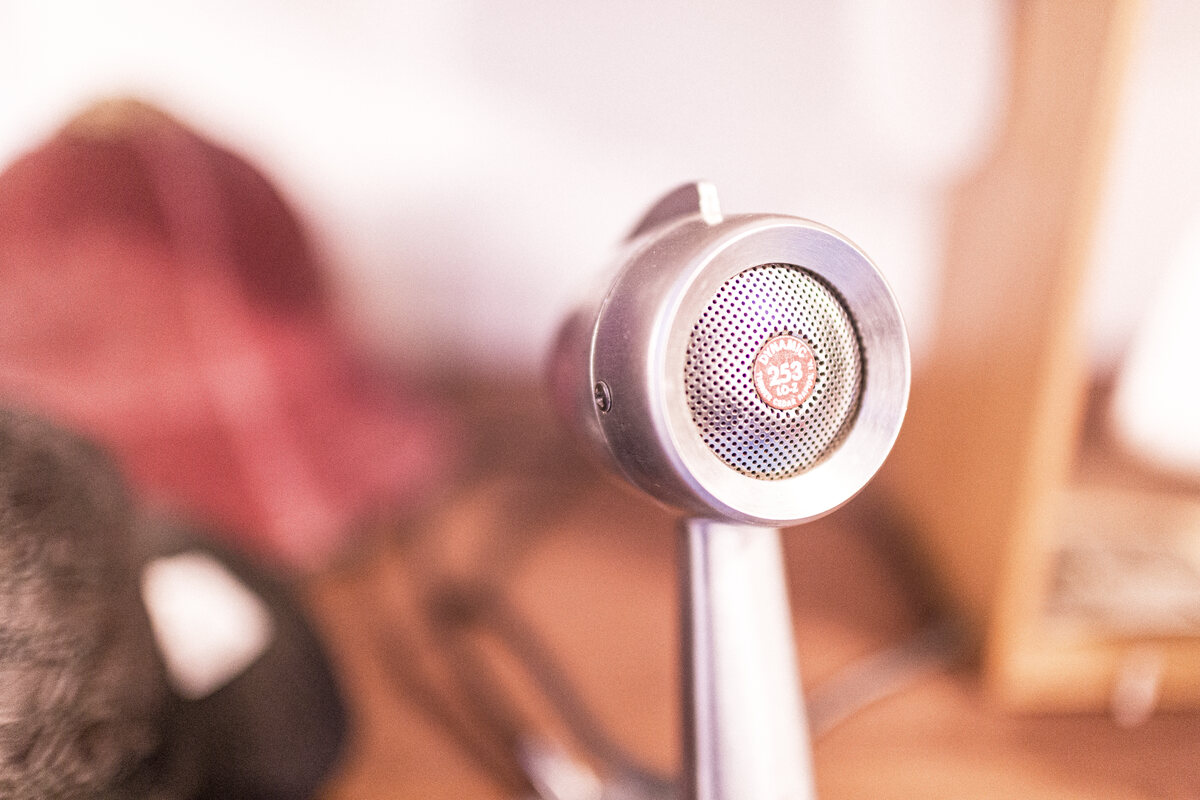
On location, that means getting close: a boom operator who knows when to be in the frame's blind spot, and when the shot genuinely has no room for one. On Ellipsis, sound was treated as load-bearing from the writing stage onward rather than added afterward, which is part of why the finished film works as well through headphones as it does on a screen.
A room has a sound before anyone speaks in it
Every location carries a baseline hum that nobody in the room notices because they've stopped hearing it: a fridge compressor, an extractor fan two rooms away, the particular hiss of air through an old radiator. None of that registers to the ear mid-conversation, but a microphone doesn't filter it out the way a brain does, and it sits underneath every line of dialogue once it's on the track. Part of the job is walking a location before anyone arrives and listening for what's actually there rather than what you expect to be there.
Room tone gets recorded deliberately, usually thirty seconds of a location with everyone silent and nobody moving, because an editor needs that exact silence later to bridge a cut or smooth a line that had to be trimmed. A room without its own tone on file is a room an editor can't cut inside cleanly, no matter how good the dialogue takes were.
Whoever is recording sound stays on headphones for the whole take, not just to check levels but to actually listen, because the things that ruin a recording rarely show up on a meter before they've already happened. A plane passing over, a door closing somewhere else in the building, a crew member's radio left on: all of it is audible in real time to someone paying attention, and none of it is something a waveform after the fact will flag on its own. Catching it mid-take means asking for one more go. Missing it means finding out in the edit, weeks later, that the one usable take of a key line has a motorbike running under the middle of it.
A boom mic beats a lapel in most cases, even though a lapel is technically cleaner. A boom picks up the room as well as the voice, which reads as more honest than a close, dry, slightly isolated recording. We choose based on what the finished film needs to feel like, not which option measures better on a meter. Both still get backed up on the day, twice, because a corrupted card is the one mistake a shoot cannot recover from.
What gets recorded besides the dialogue
A location shoot captures far more than the lines a script calls for. Wild lines, the same dialogue read again once the camera has stopped, give an editor options without the pressure of a take that also has to look right. Effects recorded on the day, a door, footsteps on a specific floor, a car pulling away, tend to sit better in a mix than a generic library sound, because they carry the actual room they were captured in rather than a stock acoustic that has to be faked to match. Live music performed for camera gets its own treatment again: a feed straight from the desk alongside a room mic, so the finished mix can lean on either depending on how polished or how live the scene is meant to feel.
We record on location wherever the brief allows it. A voice recorded in the room it was written for sounds like it belongs there.