
Documentary funding statistics 2026: who pays, and what filmmakers earn
Key takeaways
- €4.6m Screen Ireland put into documentary production in 2025 (Screen Ireland)
- 31% of documentary makers surveyed by CMSI in 2025 relied mainly on non-recoupable grants (Center for Media & Social Impact)
- 56% of makers surveyed said their latest film made no revenue in 2025 (Center for Media & Social Impact)
- 57% of those surveyed in 2025 were paid less than $25,000 from their latest film (Center for Media & Social Impact)
- 16% of respondents in 2025 could pay themselves a wage from the production fund (The Whickers via Business Doc Europe)
- £7.2m over three years of BFI National Lottery money for Doc Society from April 2026 to 2029 (BFI)
- CAD 572,074 average per-hour budget for English-language feature documentaries in Canada in 2023/24 (Documentary Organization of Canada)
Documentary funding comes from a mix of grants, public agencies, broadcasters, brands and the makers themselves. Grants were the main funding source for 31% of the documentary makers surveyed by CMSI in 2025, and in Ireland Screen Ireland covered 34% of the global budgets of the documentaries it backed in 2025. The rest usually has to be assembled from several funders at once.
The figures point to a straightforward problem: documentaries cost real money to make, but the people who make them are rarely paid properly. Of the makers surveyed by CMSI, 56% said their latest film made no revenue at all, and only 16% of respondents to The Whickers' eighth Cost of Docs survey, presented in January 2026, could pay themselves a wage from the production fund. This paper gathers what public funders have disclosed and what two surveys of documentary makers, both published in 2026, tell us about budgets, funders and pay.
1How much public money goes to documentaries?
Screen Ireland put €4.6m into 24 creative documentaries for production in 2025, which covered 34% of those films' combined €13.4m global budgets. In the UK, the BFI has delegated £7.2m over three years of National Lottery money to Doc Society from April 2026.
| Metric | Value | Source |
|---|---|---|
| Creative documentaries supported for production by Screen Ireland, 2025 | 24 | Screen Ireland (2025) |
| Screen Ireland production funding for documentaries, 2025 | €4.6m | Screen Ireland (2025) |
| Screen Ireland funding as a share of documentary global budgets, 2025 | 34% | Screen Ireland (2025) |
| Combined global budget of Screen Ireland-supported documentaries, 2025 | €13.4m | Screen Ireland (2025) |
| International finance in Screen Ireland-supported documentaries, 2025 | €3.4m | Screen Ireland (2025) |
| Screen Ireland documentary production applications decided in 2025, and successful | 37 applications, 20 successful | Screen Ireland (2025) |
| BFI National Lottery money for Doc Society, April 2026 to 2029 | £7.2m over three years | BFI (2026) |
| Increase in BFI documentary delegate funding against 2023 to 2026 | 20% | BFI (2026) |
| Maximum BFI Doc Society Fund award for a feature documentary | £150,000 | BFI Doc Society Fund (2025) |
| Typical single BFI Doc Society Fund award | £30,000 to £80,000 | BFI Doc Society Fund (2025) |
Screen Ireland's funding covered 34% of the combined global budgets of the creative documentaries it supported for production in 2025.
Screen Ireland, 2025Screen Ireland's own statistics cover only the projects it supported in 2025, so they describe the funded slice of Irish documentary rather than the whole field. The 37 documentary production applications decided that year, of which 20 were successful, show that demand for production finance outstripped what Screen Ireland could fund. The figures also show that Irish documentaries rely on international finance, with €3.4m coming from outside the domestic system.

The UK figures follow a similar pattern. The BFI's £7.2m over three years from April 2026 is a 20% increase on the previous three years, yet the maximum feature award is £150,000 and single awards are likely to fall between £30,000 and £80,000. Public grants rarely cover an entire documentary budget on their own.
For makers, that means public funding forms part of a financing plan, and teams working in documentary production in Dublin, London or elsewhere usually add broadcaster, international and private money on top of grants to reach a full budget.
2What does a documentary cost to make?
A documentary is a substantial production, but a comparatively modest one. Screen Ireland-supported documentaries carried an average global budget of €559,869 in 2025, well below the €3,193,038 average for Irish features and far below the €8,169,032 average for TV drama.
| Metric | Value | Source |
|---|---|---|
| Average global budget of a Screen Ireland-supported documentary, 2025 | €559,869 | Screen Ireland (2025) |
| Average global budget of a Screen Ireland-supported TV drama, 2025 | €8,169,032 | Screen Ireland (2025) |
| Average global budget of a Screen Ireland-supported animation project, 2025 | €3,714,297 | Screen Ireland (2025) |
| Average global budget of a Screen Ireland-supported Irish feature, 2025 | €3,193,038 | Screen Ireland (2025) |
| Average per-hour budget, English-language feature documentaries in Canada, 2023/24 | CAD 572,074 | Documentary Organization of Canada (2024) |
| Average budget of documentaries pitched at IDFA, all territories | $416K to $640K | International Documentary Association (2025) |
| Average budget of IDFA-pitched documentaries with US, Canadian or UK participation | about $900K | International Documentary Association (2025) |
The average global budget of a Screen Ireland-supported documentary in 2025, far below the €8,169,032 average for the TV drama projects it backed the same year.
Screen Ireland, 2025These figures come from different funding systems and different currencies, so they should not be compared to the cent. The Screen Ireland numbers cover only projects it supported in 2025. The Canadian figure is a per-hour budget for English-language feature documentaries in 2023/24, reported in Canadian dollars. The IDFA numbers are the plan-A budgets of projects pitched at the festival, not their final costs. Individual documentary budgets vary widely.
Even with those caveats, the pattern is consistent. Screen Ireland-backed documentaries averaged €559,869, while the Canadian per-hour average for English-language feature documentaries came in at CAD 572,074. The two figures measure different things: one is a total budget in euro, the other a per-hour budget in Canadian dollars. Projects with US, Canadian or UK participation pitched at IDFA averaged about $900K, and even that figure sits far below scripted budgets.
For a Dublin video production company such as Collective Films, that places a documentary budget closer to a large brand film than to a TV drama, which shapes how schedules, crews and delivery expectations are set.
3Who pays for documentaries?
For the documentary makers surveyed, the money comes mostly from grants and their own pockets: 31% said non-recoupable grants were the main funding source for their most recent film, 21% said their own money and 18% said individual donors (Center for Media & Social Impact, 2026).
| Metric | Value | Source |
|---|---|---|
| Main funding source was non-recoupable grants | 31% | Center for Media & Social Impact (2026) |
| Main funding source was makers' own money | 21% | Center for Media & Social Impact (2026) |
| Main funding source was individual donors | 18% | Center for Media & Social Impact (2026) |
| Professionals naming funding as the greatest challenge | 47% | Center for Media & Social Impact (2026) |
| Provincial tax credits as a share of Canadian documentary financing, 2023/24 | 19% | Documentary Organization of Canada (2025) |
| Canada Media Fund share of documentary financing, 2019/20 to 2023/24 | 17% to 13% | Documentary Organization of Canada (2025) |
| International finance in Screen Ireland-supported documentaries, 2025 | €3.4m | Screen Ireland (2025) |
| Screen Ireland funding as a share of documentary global budgets, 2025 | 34% | Screen Ireland (2025) |
Non-recoupable grants were the most common main funding source for the most recent film of documentary makers surveyed, ahead of self-financing and individual donors.
Center for Media & Social Impact, 2026That mix looks little like the commissioning model most audiences imagine. Commercial broadcasters and streamers were not the predominant sources for the people the CMSI researchers surveyed. The report is explicit that these commercial outlets are not where most of the money originates. Instead, the work is carried by grants that never have to be repaid, by savings and by donors who ask for nothing back. Nearly half of professionals (47%) named funding as the greatest challenge they face.
Public systems show the same pattern from a different angle. In Canada, provincial tax credits made up 19% of total documentary financing in 2023/24, while the Canada Media Fund's share fell from 17% to 13% between 2019/20 and 2023/24. In Ireland, Screen Ireland-backed documentaries drew €3.4m of international finance in 2025, though Screen Ireland funding itself covered 34% of those films' global budgets, so most of the balance still had to be assembled elsewhere.
For brands or commissioners weighing a first documentary investment, the data suggests their money is often not the foundation of the budget but a later piece that completes a structure already built from grants, tax credits and the maker's own commitment.
4Do documentaries make money for their makers?
For most documentary makers surveyed, the answer is no: 56% said their most recent documentary made no revenue in 2025, up from 42% in 2020.
| Metric | Value | Source |
|---|---|---|
| Makers whose latest film made no revenue, 2025 | 56% | Center for Media & Social Impact (2025) |
| Makers whose latest film made no revenue, 2020 | 42% | Center for Media & Social Impact (2020) |
| Makers paid less than $25,000 from their latest film | 57% | Center for Media & Social Impact (2025) |
| Makers paid $25,001 to $75,000 from their latest film | 23% | Center for Media & Social Impact (2025) |
| Makers paid $75,001 to $125,000 from their latest film | 13% | Center for Media & Social Impact (2025) |
| Documentary professionals surveyed | 820 | Center for Media & Social Impact (2025) |
Of documentary makers surveyed said their most recent documentary made no revenue in 2025.
Center for Media & Social Impact, 2026These figures come from the CMSI study of 820 documentary professionals, published in 2026, and they describe the people who responded rather than the whole industry. The direction still matters. The share of respondents whose latest film earned nothing rose from 42% in 2020 to 56% in 2025, so the problem looks worse after five years, not better.
Personal income tells a similar story. Among makers surveyed, 57% earned less than $25,000 from their most recent documentary, 23% earned between $25,001 and $75,000, and 13% earned between $75,001 and $125,000. That is the income from one film, often after years of development, shooting and editing. For a majority of respondents, a completed documentary did not come close to replacing a salary.
Anyone planning a documentary should treat distribution revenue as uncertain and build the budget around fees, grants and commissioning rather than hoped-for sales. That is the reality we work with on our own film work, and it is why clear budgets and fair producer fees matter more than optimistic revenue projections.
5Can documentary makers pay themselves?
Only 16% of documentary makers surveyed by The Whickers could pay themselves a wage from their production fund, and just 21% felt adequately paid for their work.
| Metric | Value | Source |
|---|---|---|
| Makers able to pay themselves a wage from the production fund | 16% | The Whickers, via Business Doc Europe (2025) |
| Makers who felt adequately paid | 21% | The Whickers, via Business Doc Europe (2025) |
| Share of their time makers felt properly paid for | 42% (up from 35%) | The Whickers, via Business Doc Europe (2025) |
| Makers relying on other freelance work to cover the shortfall | 55% | The Whickers, via Business Doc Europe (2025) |
| Makers forced out of the industry by the cost of living | 4% | The Whickers, via Business Doc Europe (2025) |
| Documentaries listing kit hire as an expense, 2024/25 vs latest survey | 42% to 73% | The Whickers, via Business Doc Europe (2025) |
| The Whickers' top Film and TV award, after the latest survey | £120,000 (from £100,000) | The Whickers, via Business Doc Europe (2026) |
Only 16% of documentary makers surveyed could pay themselves a wage from the production fund, so most depend on income from somewhere else.
The Whickers, 2026The eighth Cost of Docs survey, presented at FIPADOC in January 2026, puts numbers on something makers have said for years. Respondents felt properly paid for 42% of their time, up from 35% in the previous survey. That is an improvement, but it still leaves most working hours unpaid or underpaid. Since 55% of makers cover the shortfall through other freelance work, documentary making often works out as a subsidised craft rather than a self-supporting business.
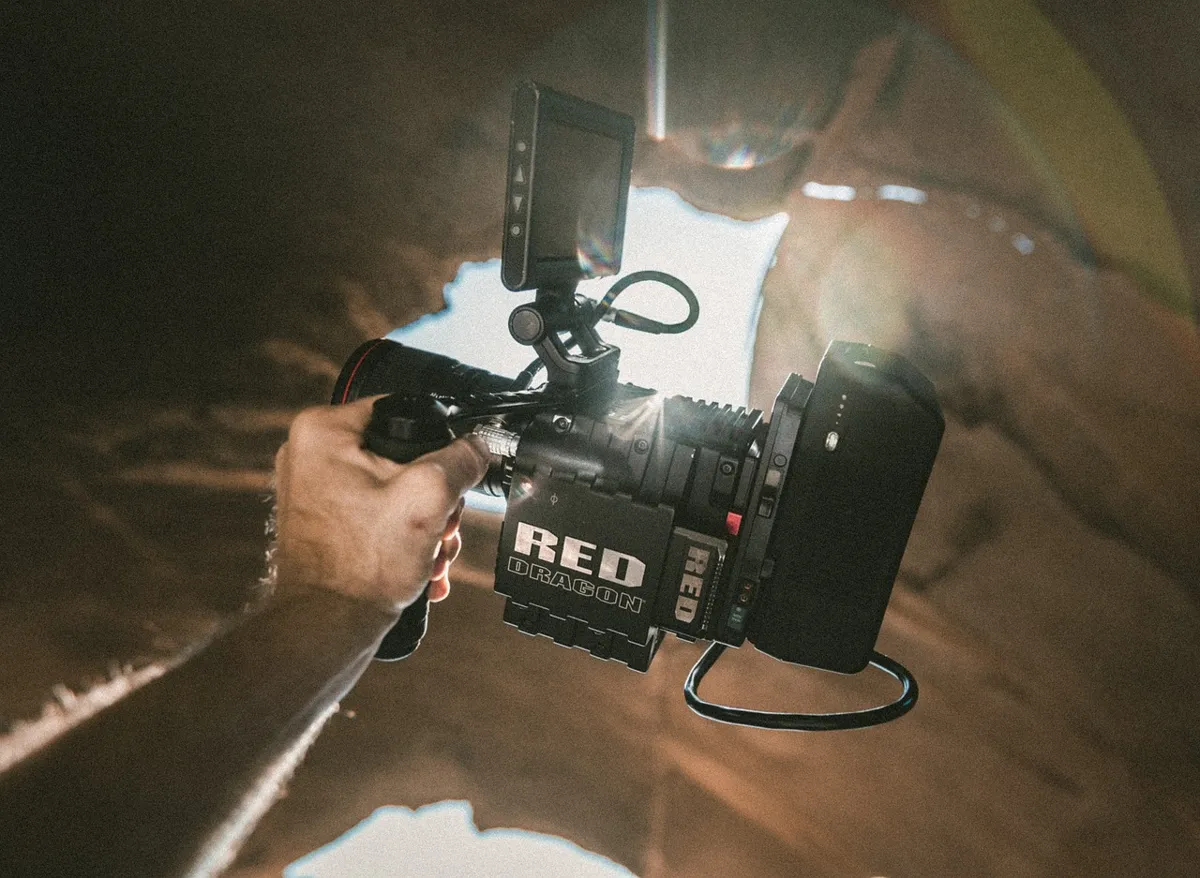
Rising costs make that gap harder to manage. Kit hire was cited as an expense by 73% of documentaries surveyed, up from 42% in the 2024/25 survey, and a documentary budget has to cover the edit, grade and sound in post-production as well as the shoot. The cost of living pushed 4% of respondents out of the industry, and a further 56% said it had a major impact on their ability to make documentaries.
Funders have responded to this in one way at least. The Whickers raised their top Film and TV award from £100,000 to £120,000, because awards sized to older budgets no longer match what documentaries cost to make.
How this data was compiled
The figures were compiled on 16 November 2026 from Screen Ireland's 2025 statistics, BFI and Doc Society fund documents, the Documentary Organization of Canada's Getting Real 8 report drawing on CAVCO data, the Center for Media & Social Impact's 2026 study and The Whickers' Cost of Docs survey as reported by Business Doc Europe. Key figures were second-checked against live sources with a web search. Collective Films ran no surveys of its own and only reports what these organisations published.
- Sources consulted
- 14
- Sources cited
- 7
- Data range
- 2019/20 to 2026 (most figures 2025)
- Last verified
- 16 November 2026
- Update schedule
- This page is refreshed when Screen Ireland publishes its annual statistics, when The Whickers present their next Cost of Docs survey each January, and when CMSI publishes its next biennial study.
- Limitations
- The survey figures come from self-selecting samples of documentary makers, many based in the US or UK, so they describe independent makers rather than the whole factual sector. Screen Ireland figures cover only the projects it funded in 2025, Canadian budgets are in Canadian dollars and are not converted, and pitch-stage budgets reflect what filmmakers asked for rather than final costs.
Frequently asked questions
How are documentaries funded?
Most independent documentaries are funded from a mix of grants and personal contribution. Among documentary makers surveyed by the Center for Media & Social Impact in 2025, 31% said their main funding source was non-recoupable grants. Screen Ireland also put €4.6m into documentaries in 2025, which covered 34% of the global budgets of the films it backed.
How much does a documentary cost to make?
Costs depend on territory and format. Screen Ireland reports an average global budget of €559,869 for the documentaries it supported in 2025. In Canada, the Documentary Organization of Canada puts the average per-hour budget for English-language feature documentaries in 2023/24 at CAD 572,074. Both averages cover a wide range of productions, from smaller films to much larger ones.
How much documentary funding does Screen Ireland give?
Screen Ireland put €4.6m of production funding into documentaries in 2025. That covered 34% of the global budgets of the projects it supported that year, so the balance came from other financiers. The figures cover only documentaries Screen Ireland funded in 2025, not the whole Irish documentary sector.
How much can the BFI Doc Society Fund give a documentary?
A typical single award from the BFI Doc Society Fund is £30,000 to £80,000, according to the fund's 2025 guidelines, with a maximum award of £150,000 for a feature documentary. The fund is backed by BFI National Lottery money of £7.2m over three years from April 2026 to 2029, as announced by the BFI.
Do documentary filmmakers get paid?
Often very little from the films themselves. In the CMSI 2025 survey of documentary makers, 57% said they were paid less than $25,000 from their latest film. The Whickers' eighth Cost of Docs survey, presented in January 2026, found only 16% of respondents could pay themselves a wage from their production fund. Many makers rely on other work to stay afloat.
Do most documentaries make money?
For their makers, usually not. The Center for Media & Social Impact's 2025 survey found 56% of documentary makers said their latest film made no revenue at all. A funder or commissioner should budget for a proper maker fee rather than rely on the film's revenue to cover it.
Sources
- Fís Éireann/Screen Ireland. "Key Screen Ireland Statistics 2025." screenireland.ie. Accessed 16 November 2026.
- Center for Media & Social Impact, American University. "The State of the Documentary Field: 2026 Study of Global Documentary Professionals, 15 Key Findings." cmsimpact.org. Accessed 16 November 2026.
- Business Doc Europe. "FIPADOC Pro Industry Days: The Whickers presents 8th Cost of Docs Survey." businessdoceurope.com. Accessed 16 November 2026.
- British Film Institute. "BFI increases its support of UK documentary filmmaking, investing £7.2m of National Lottery funding over three years." bfi.org.uk. Accessed 16 November 2026.
- Doc Society. "BFI Doc Society Fund: feature documentary guidelines." bfi.docsociety.org. Accessed 16 November 2026.
- Documentary Organization of Canada / Nordicity. "Getting Real 8: research report (Nordicity, CAVCO data)." nordicity.com. Accessed 16 November 2026.
- International Documentary Association. "A Fresh 2025 Introduction to Documentary Budgeting and Scheduling." documentary.org. Accessed 16 November 2026.
Last updated . Figures are checked against their original sources when new data is released.
Collective Films, Dublin is an independent studio, making corporate video production, commercials for brands, feature documentaries, brand storytelling films and charity video production, with video post production in house.